
19/08/26
Healthcare solutions rarely exist in isolation.
Behind every piece of equipment, every adaptation and every completed project is a person with their own needs, routines, goals and environment. Finding the right solution often requires input from several different people, each bringing a different perspective.
That is why partnership plays such an important role in modern healthcare.
For us at Elite Healthcare, partnership means working alongside occupational therapists, healthcare providers, care teams, facilities teams and other stakeholders to help develop solutions that work not only clinically, but practically and personally.
Listening to the People Who Understand the Need
Occupational therapists play a particularly important role in identifying appropriate equipment and adaptations.
Their understanding goes far beyond a product specification. They are considering the individual’s mobility, independence, daily routines, environment and longer-term goals.
Working closely with occupational therapists allows us to bring our own product and technical knowledge into that conversation.
An OT may understand exactly what a person needs to achieve. Our role is to help determine how equipment, room design or a particular configuration can support that goal.
Sometimes the answer is straightforward. Other times, it requires exploring several possibilities before the right solution becomes clear.
That collaborative process is often where the best outcomes begin.
Supporting Healthcare Providers
Healthcare providers face a different set of challenges.
Alongside the needs of individual patients or residents, they may also need to consider staff safety, infection control, space constraints, manual handling, durability, budgets and the practical realities of delivering care every day.
A solution therefore needs to work for more than one person.
It may need to support the individual receiving care, the staff assisting them and the organisation responsible for maintaining the environment over many years.
By working directly with healthcare providers, we can help look at that wider picture rather than simply supplying a product to meet a specification.
Collaboration Doesn’t Stop When a Product Is Selected
Choosing the right equipment is only one part of many healthcare projects.
Installation may involve contractors, architects, electricians, plumbers, facilities teams, occupational therapists and clinical staff. Products such as overhead hoists, height-adjustable changing tables, accessible bathing equipment and specialist washbasins often need to integrate with the surrounding building and services.
That makes communication during the project essential.
Early collaboration can help identify potential challenges before installation begins. Dimensions can be checked, structural requirements considered, services coordinated and the intended use of the room understood.
When everyone involved understands both the equipment and the desired outcome, projects are much more likely to progress smoothly.
Building Relationships Beyond Installation
Healthcare equipment also needs to continue performing long after a project has been completed.
That is why we see servicing and ongoing support as part of the relationship rather than something separate from it.
Equipment may require preventative maintenance, LOLER examinations where applicable, repairs, replacement components or adjustments as circumstances change.
Having access to a team that understands the equipment and its application helps healthcare providers protect their investment while reducing disruption for the people who rely on it.
It also creates continuity.
Rather than beginning again every time a question arises, long-term relationships allow suppliers and healthcare teams to build knowledge of facilities, equipment and the people using them.
Keeping the Person at the Centre
Ultimately, good healthcare partnerships should lead back to one thing: better outcomes for people.
Person-centred care means looking beyond a diagnosis or a list of equipment requirements.
What matters to this person?
What are they finding difficult?
What would they like to continue doing independently?
What would make care safer or more comfortable?
Those questions can change the direction of a solution entirely.
Equipment has an important role to play, but it should support the outcome rather than define it.
The most effective solutions often emerge when clinical knowledge, lived experience, technical expertise and practical considerations are brought together.
Better Outcomes Through Better Collaboration
Modern healthcare is increasingly complex, and no single person or organisation has every answer.
Occupational therapists understand the clinical and functional needs of the individual. Care teams understand what happens day to day. Facilities and project teams understand the environment. Families and individuals understand their own priorities. Specialist suppliers understand the equipment and how it can be applied.
Each perspective adds something valuable.
At Elite Healthcare, our aim is to be part of that wider team—providing specialist knowledge, practical support and ongoing service while listening to the people who know the individual and their environment best.
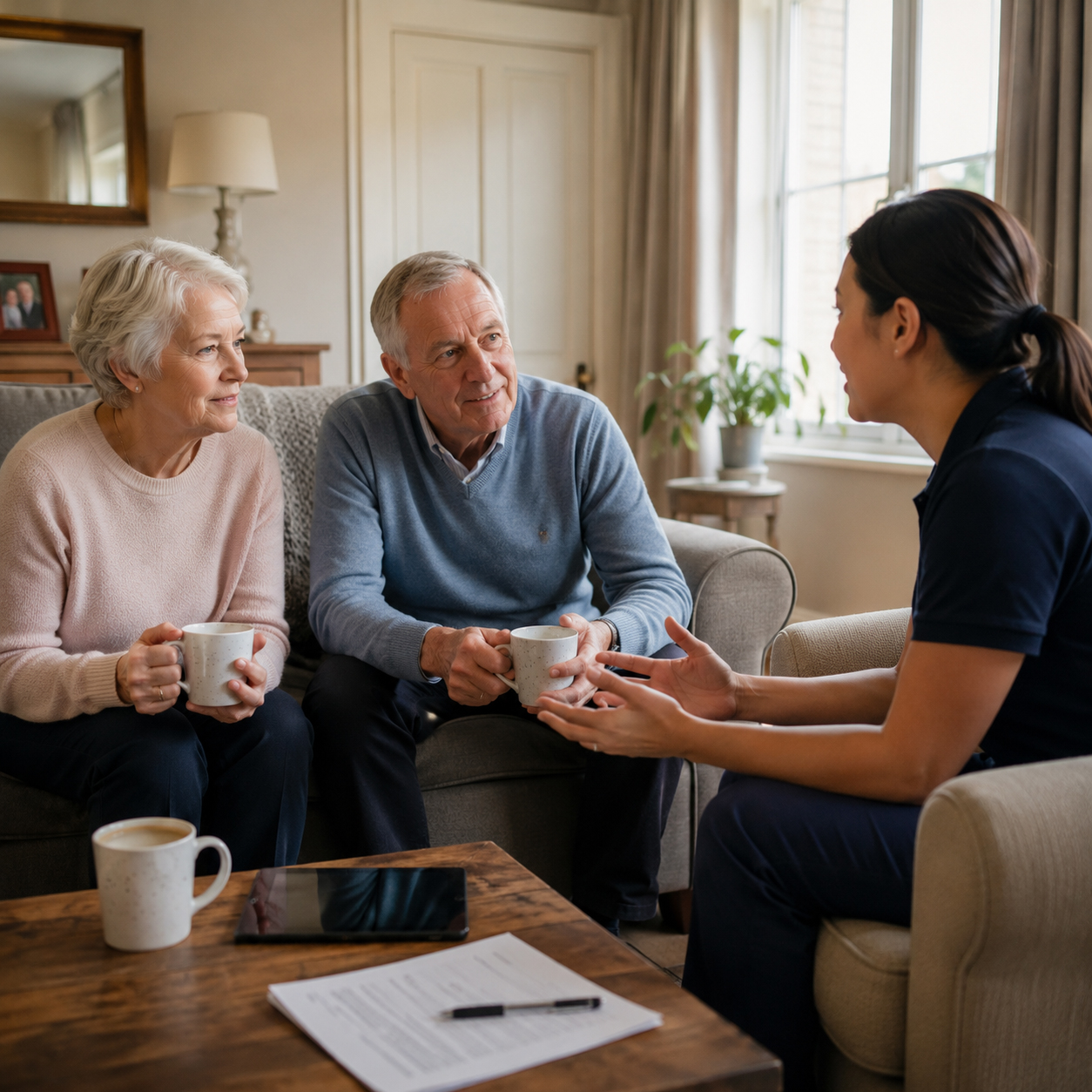
Because sometimes the best healthcare solution doesn’t start with a product.
It starts with a conversation.
Healthcare solutions rarely exist in isolation.
Behind every piece of equipment, every adaptation and every completed project is a person with their own needs, routines, goals and environment. Finding the right solution often requires input from several different people, each bringing a different perspective.
That is why partnership plays such an important role in modern healthcare.
For us at Elite Healthcare, partnership means working alongside occupational therapists, healthcare providers, care teams, facilities teams and other stakeholders to help develop solutions that work not only clinically, but practically and personally.
Listening to the People Who Understand the Need
Occupational therapists play a particularly important role in identifying appropriate equipment and adaptations.
Their understanding goes far beyond a product specification. They are considering the individual’s mobility, independence, daily routines, environment and longer-term goals.
Working closely with occupational therapists allows us to bring our own product and technical knowledge into that conversation.
An OT may understand exactly what a person needs to achieve. Our role is to help determine how equipment, room design or a particular configuration can support that goal.
Sometimes the answer is straightforward. Other times, it requires exploring several possibilities before the right solution becomes clear.
That collaborative process is often where the best outcomes begin.
Supporting Healthcare Providers
Healthcare providers face a different set of challenges.
Alongside the needs of individual patients or residents, they may also need to consider staff safety, infection control, space constraints, manual handling, durability, budgets and the practical realities of delivering care every day.
A solution therefore needs to work for more than one person.
It may need to support the individual receiving care, the staff assisting them and the organisation responsible for maintaining the environment over many years.
By working directly with healthcare providers, we can help look at that wider picture rather than simply supplying a product to meet a specification.
Collaboration Doesn’t Stop When a Product Is Selected
Choosing the right equipment is only one part of many healthcare projects.
Installation may involve contractors, architects, electricians, plumbers, facilities teams, occupational therapists and clinical staff. Products such as overhead hoists, height-adjustable changing tables, accessible bathing equipment and specialist washbasins often need to integrate with the surrounding building and services.
That makes communication during the project essential.
Early collaboration can help identify potential challenges before installation begins. Dimensions can be checked, structural requirements considered, services coordinated and the intended use of the room understood.
When everyone involved understands both the equipment and the desired outcome, projects are much more likely to progress smoothly.
Building Relationships Beyond Installation
Healthcare equipment also needs to continue performing long after a project has been completed.
That is why we see servicing and ongoing support as part of the relationship rather than something separate from it.
Equipment may require preventative maintenance, LOLER examinations where applicable, repairs, replacement components or adjustments as circumstances change.
Having access to a team that understands the equipment and its application helps healthcare providers protect their investment while reducing disruption for the people who rely on it.
It also creates continuity.
Rather than beginning again every time a question arises, long-term relationships allow suppliers and healthcare teams to build knowledge of facilities, equipment and the people using them.
Keeping the Person at the Centre
Ultimately, good healthcare partnerships should lead back to one thing: better outcomes for people.
Person-centred care means looking beyond a diagnosis or a list of equipment requirements.
What matters to this person?
What are they finding difficult?
What would they like to continue doing independently?
What would make care safer or more comfortable?
Those questions can change the direction of a solution entirely.
Equipment has an important role to play, but it should support the outcome rather than define it.
The most effective solutions often emerge when clinical knowledge, lived experience, technical expertise and practical considerations are brought together.
Better Outcomes Through Better Collaboration
Modern healthcare is increasingly complex, and no single person or organisation has every answer.
Occupational therapists understand the clinical and functional needs of the individual. Care teams understand what happens day to day. Facilities and project teams understand the environment. Families and individuals understand their own priorities. Specialist suppliers understand the equipment and how it can be applied.
Each perspective adds something valuable.
At Elite Healthcare, our aim is to be part of that wider team—providing specialist knowledge, practical support and ongoing service while listening to the people who know the individual and their environment best.
Because sometimes the best healthcare solution doesn’t start with a product.
It starts with a conversation.